
– SYLLABUS –
Bachelor Level Common Entrance Examination
Table of Contents
Table of Contents
Introduction:
Objectives:
Process:
General consensus:
1.MBBS/BDS/BSc Nursing/BASLP/B Perfusion Technology
2.BAMS/BSc MLT/BSc MIT/BPT/BPharm/B Optometry
3.BPH (Bachelor in Public Health)
4.BNS (Bachelor in Nursing Science)
Sample questions for all programs
Introduction:
Health Professional education was started in Nepal formerly after establishment of Institute of Medicine under Tribhuvan University in 1972 beginning with training of middle level human resources for health. A bachelor level course in Institute of Medicine was started in 1978 and postgraduate studies since 1982. Similarly, BP Koirala Institute of Health Sciences was established in eastern Nepal in 1993, Manipal Academy of Health Sciences was established under Kathmandu University as a Kathmandu University affiliated private institutions in 1993. Kathmandu University School of Medical Sciences as constituent campus started MBBS program in 2001. Then National Academy of Medical Sciences was established in 2002 and Patan Academy of Health Sciences in 2008.
Since late 90’s, over a period of decade, numerous private medical institutions were also opened in affiliation to various universities. In one hand, the rapid development of medical institutions helped for fulfilling the gap between need of human resources for health. In the other hand, there have been issues related to quality in health professional education and also the process and costs related to the entrance examination and student enrollment. In this context, National Medical Education Act 2075 has envisioned the common entrance examination to be conducted by Medical Education Commission for enrollment of students in various programs and colleges throughout the country. For conducting the Bachelor level common entrance examination, the commission has felt the need to prepare a common syllabus in consultation with experts from various institutions with experience in bachelor level entrance examination.
Objectives:
- To develop common syllabus of specific academic programs for bachelor level common entrance examination
- To generate consensus and match logically between the existing bachelor level entrance syllabus effective at various medical institutions
- To find the scope of improvements/innovations in currently existing bachelor level entrance examination
Process: - Institutions conducting bachelor level entrance examinations were officially corresponded to send the ongoing bachelor level programs they are conducting and the syllabus for entrance examinations.
- The syllabus for related disciplines from various institutions were compiled.
- Team of experts in the related disciplines representing various institutions worked up for the common syllabus with the help of available compiled documents.
- Workshop was conducted to scrutinize the contents and other aspects on entrance syllabus involving the experts who developed the syllabus and experienced experts conducting bachelor level entrance examinations in various institutions and head/chief of examination divisions in the respective institutions.
- Workshop involving all head of institutions and concerned regulatory authority was conducted to come up with the consensus.
General consensus:
A common consensus on relevant issues related to syllabus were generated with brainstorming and regular discussions as per above mentioned process involving all stakeholders related to training of bachelor level academic programs.
✓ Experts agreed to develop the syllabus for four groups representing all the bachelor level programs: - MBBS/BDS/BSc Nursing/BASLP/ B Perfusion Technology
- BAMS/BSc MLT/BSc MIT/BPT/BPharm/B Optometry
- BPH (Bachelor in Public Health)
- BNS (Bachelor in Nursing Science)
✓ A consensus was generated to have entrance test paper with 200 multiple choice questions to improve content coverage as well as to match with the recent practice. This will also help differentiation of the candidates by minimizing the tie in the marks among the candidates.
✓ Multiple choice questions (MCQs) will be of Single Best Response Type (Type A) with four options.
✓ Adopt Criterion Referenced Test with 50% pass mark with no negative marking.
✓ A consensus was generated to allow 3 hours with instruction to paper setter that the stem or vignette of the MCQs should not exceed 60 words.
✓ All agreed to include 20 MCQs from Mental Agility Test for all the academic programs.
✓ For the programs with eligibility also from PCL in Health Sciences, a consensus was generated to include 20 MCQs related to the specific subject as per the respective PCL programs.
✓ Difficulty level of the items should be set from the time of item preparation as: - Recall: 30%
- Understanding: 50%
- Application and above: 20%
MBBS/BDS/BSc Nursing/BASLP/B Perfusion Technology
A. Eligibility
a. Passed 10+2 Science or equivalent (with Physics, Chemistry and Biology) with 50% aggregate in total marks or GPA 2.4
OR
Secured the Percentage equivalent to above eligibility in regards to the certificate level programs (A-Level) with different grading system
OR
b. Applicants who have passed the Health Science Proficiency Certificate Level /Diploma (General Medicine, Medical Lab Technology, Ophthalmic Science, Dental Science, Pharmacy, Ayurveda, Radiography, Physiotherapy) containing Physics, Chemistry and Biology with Certificate of Equivalence to Grade 12 Science program from National Examination Board AND
c. Secured at least 50% aggregate in total marks both in Diploma and the Examination for equivalence AND
d. Registered in Nepal Health Professional council or Nepal Pharmacy Council or Nepal Ayurveda Council as per related educational program.
B. Examination Format
a. Question type: Single best response type of multiple-choice questions
b. Option: Four options (A, B, C, D)
c. Number of questions: 200
d. Full marks: 200
e. Cognitive ratio: Recall: Understanding: Application – 30:50:20
f. Duration: 3 hours
C. Weightage
| S.N. | Content/Domain | Question |
| a. | Zoology | 40 |
| 1. | Biology , origin and evolution of life | 4 |
| 2. | General characteristics and classification of protozoa to cholera | 8 |
| 3. | Plasmodium, earthworm and frog | 8 |
| 4. | Human biology and human diseases | 14 |
| 5. | Animal tissues | 4 |
| 6. | Environmental pollution, adaptation and animal behavior, application of zoology | 2 |
| b. | Botany | 40 |
| 7. | Basic component of life and biodiversity | 11 |
| 8. | Ecology and environment | 5 |
| 9. | Cell biology and genetics | 12 |
| 10. | Anatomy and physiology | 7 |
| 11. | Development and applied botany | 5 |
| c. | Chemistry | 50 |
| 12. | General and physiology chemistry | 5 |
| 13. | Inorganic chemistry | 14 |
| 14. | Organic chemistry | 18 |
| d. | Physics | 50 |
| 15. | Mechanics | 10 |
| 16. | Heat and thermodynamics | 6 |
| S.N. | Content/Domain | Question |
| 17. | Geometrical optics and physical optics | 6 |
| 18. | Current electricity and magnetism | 9 |
| 19. | Sound waves, electrostatics and capacitors | 6 |
| 20. | Modern physics and nuclear physics | 6 |
| 21. | Solid and semiconductor devices (electronics) | 4 |
| 22. | Particle physics, source of energy and universe | 3 |
| e. | Mental Agility Test (MAT) | 20 |
| 23. | Verbal reasoning | 5 |
| 24. | Numerical reasoning | 5 |
| 26. | Spatial relation/Abstract reasoning | 5 |
| Total | 200 |
BAMS/BSc MLT/BSc MIT/BPT/BPharm/B Optometry
A. Eligibility
a. Passed 10+2 Science or equivalent (with Physics, Chemistry and Biology) with 50% aggregate in total marks or GPA 2.4
OR
Secured the percentage equivalent to above eligibility in regards to the certificate level programs (eg. A-Level) with different grading system
OR
b. Applicants who have passed the Health Science Proficiency Certificate/Diploma (General Medicine, Medical Lab Technology, Ophthalmic Science, Dental Science, Pharmacy, Ayurveda, Radiography, Physiotherapy) with at least 50% aggregate in total marks AND
c. Registered in Nepal Health Professional Council or Nepal Pharmacy Council or Nepal Ayurveda Council as per related educational program.
B. Examination Format
a. Question type: Single best response type of multiple-choice questions
b. Option: Four options (A, B, C, D)
c. Number of questions: 200
d. Full marks: 200
e. Cognitive ratio: Recall: Understanding: Application – 30:50:20
f. Duration: 3 hours
C. Weightage
| S.N. | Content/Domain | Question |
| a. | Zoology | 40 |
| 1. | Biology, origin and evolution of life | 4 |
| 2. | General characteristics and classification of protozoa to chordata. | 8 |
| 3. | Plasmodium, earthworm and frog, | 8 |
| 4. | Human biology and human diseases | 14 |
| 5. | Animal tissues | 4 |
| 6. | Environmental pollution , adaptation and animal behavior, application of zoology | 2 |
| b. | Botany | 40 |
| 7. | Basic component of life and biodiversity | 11 |
| 8. | Ecology and environment | 5 |
| 9. | Cell biology and genetics | 12 |
| 10. | Anatomy and physiology | 7 |
| 11. | Developmental and applied botany | 5 |
| 12. | General and physical chemistry | 15 |
| 13. | Inorganic chemistry | 10 |
| 14. | Organic chemistry | 15 |
| 15. | Mechanics | 9 |
| 16. | Heat and thermodynamics | 5 |
| 17. | Geometrical optics and physical optics | 5 |
| 18. | Current electricity and magnetism | 7 |
| 19. | Soud waves, electrostatics and capacitors | 5 |
| 20. | Modern physics and magnetism | 7 |
| 21. | Solid and semiconductor devices (electronics) | 2 |
| 22. | Particle physics, source of energy and universe | 2 |
| e. | Contents from PCL level course of specific subject | 20 |
| 23. | Contents from PCL/ diploma level course of specific subject | 20 |
| f. | Mental Agility Test (MAT) | 20 |
| 24. | Verbal reasoning | 5 |
| 25. | Numbering reasoning | 5 |
| 26. | Logical sequencing | 5 |
| 27. | Spatial relation/ Abstract reasoning | 5 |
| Total | 200 |
BPH (Bachelor in Public Health)
A. Eligibility
a. Passed 10+2 Science or equivalent (with Physics, Chemistry and Biology) with 50% aggregate in total marks or GPA 2.4
OR
Secured the Percentage equivalent to above eligibility in regards to the certificate level programs (A-Level) with different grading system
OR
b. Applicants who have passed the Health Science Proficiency Certificate/Diploma (General Medicine, Medical Lab Technology, Ophthalmic Science, Dental Science, Pharmacy, Ayurveda, Nursing, Radiography, Physiotherapy) with at least 50% aggregate in total marks. AND
c. Registered in Nepal Health Professional Council or Nepal Pharmacy Council, Nepal Nursing Council or Nepal Ayurveda Council as per related educational program.
B. Examination Format
a. Question type: Single best response type of multiple-choice questions
b. Option: Four options (A, B, C, D)
c. Number of questions: 200
d. Full marks: 200
e. Cognitive ratio: Recall: Understanding: Application – 30:50:20
f. Duration: 3 hours
C. Weightage
| S.N. | Content/Domain | Question |
| a. | Zoology | 40 |
| 1. | Biology, origin and evolution of life | 4 |
| 2. | General characteristics and classification of protozoa to chordata | 8 |
| 3. | Plasmodium, earthworm and frog, | 8 |
| 4. | Human biology and human diseases | 14 |
| 5. | Animal tissues | 4 |
| 6. | Environmental pollution, adaptation and behavior, application of zoology | 2 |
| b. | Botany | 40 |
| 7. | Basic component of life and biodiversity | 11 |
| 8. | Ecology and environment | 5 |
| 9. | Cell biology and genetics | 12 |
| 10. | Anatomy and physiology | 7 |
| 11. | Developmental and applied botany | 5 |
| c. | Chemistry | 40 |
| 12. | General and physical chemistry | 15 |
| 13. | Inorganic chemistry | 10 |
| 14. | Organic chemistry | 15 |
| d. | Physics | 40 |
| 15. | Mechanics | 9 |
| 16. | Heat and thermodynamics | 5 |
| 17. | Geometrical optics and physical optics | 5 |
| 18. | Current electricity and magnetism | 7 |
| 19. | Sound waves, electrostatics and capacitors | 5 |
| 20. | Modern physics and nuclear physics | 5 |
| 21. | Solid and semiconductor devices (electronics) | 2 |
| 22. | Particle physics, source of energy and universe | 2 |
| e. | Pre-requisite Health Knowledge (Basic Concepts) | 20 |
| 23. | Determination of health and illness | 5 |
| 24. | Communicable diseases including vector borne disease and zoonotic diseases | 5 |
| 25. | Non-communicable diseases | 3 |
| 26. | Water, sanitation and hygiene ( WASH) | 2 |
| 27. | Basic concept of bio-statics and epidemiology | 5 |
| f. | Mantal Agility Test (MAT) | 20 |
| 28. | Verbal reasoning | 5 |
| 29. | Numerical reasoning | 5 |
| 30. | Logical sequencing | 5 |
| 31. | Spatial relation/ Abstract reasoning | 5 |
| Total | 200 |
BNS (Bachelor in Nursing Science)
A. Eligibility
a. Proficiency Certificate Level/ Diploma in Nursing securing at least 50% aggregate in total marks. AND
b. Registered in Nepal Nursing Council
B. Examination Format
a. Question type: Single best response type of multiple-choice questions
b. Option: Four options (A, B, C, D)
c. Number of questions: 200
d. Full marks: 200
e. Cognitive ratio: Recall: Understanding: Application – 30:50:20
f. Duration: 3 hours
C. Weightage
| S.N. | Content/Domain | Question |
| a. | Core Subjects | 150 |
| 1. | Community health nursing | 25 |
| 2. | Adults health nursing | 25 |
| 3. | Child health nursing | 25 |
| 4. | Midwifery and Gynaecological nursing | 25 |
| 5. | Fundamental of nursing | 20 |
| 6. | Leadership and management | 20 |
| 7. | Behaviour science and mental health | 10 |
| b. | Basic and Integrated Health Science applied to nursing | 30 |
| c. | Mental Agility Test (MAT) | 20 |
| 8. | Verbal reasoning | 5 |
| 9. | Numerical reasoning | 5 |
| 10. | Logical sequencing | 5 |
| 11. | Abstract reasoning/ Spatial relation | 5 |
| Total | 200 |
Sample questions for all programs
For the test, there will be a single set of 200 multiple choice questions (MCQs) each worth one mark for a total of 200 full marks. Each question will have four possible options, with a single correct response. A single answer sheet will be provided to the candidate to response the correct answers. The answer sheet consists of four bubbles as shown below:
Example of answer sheet:
| Q.N. | A | B | C | D |
| 1. | A | B | C | D |
Sample question:
Which one of the following drugs is approved by FDA for treatment of COVID-19? (Key-A)
A. Remdesivir
B. Chloroquine
C. Azithromycin
D. Amoxicillin
Example of correct answer:
| Q.N. | A | B | C | D |
| 1. | A | B | C | D |
Note: All candidates should use the Black Gel Ink Pen (provided at the examination centre) to mark their answers. They should fill the correct bubble in the answer sheet using the black gel pen.
Sample question for MAT (Mental Agility Test):
Verbal Reasoning :
Rita goes 30 km towards North from a fixed point, then after turning to her right she goes 20 km. After this she goes 30 km after turning to her right. How far and in what direction is she from her starting point? (Key-C)
A. 10 km west
B. 15 km east
C. 20 km east
D. 30 km west
Numerical Reasoning:
The length and breadth are increased by 15% and 25% respectively. What is the percentage increase in the area of rectangle? (Key-D)
A. 20%
B. 30%
C. 40%
D. 44%
Logical Sequencing:
Look at this series: 53, 53, 40, 40, 27, 27, …… Which pair of number should come next? (Key-B)
A. 12
B. 14
C. 27
D. 53
Spatial Reasoning:
Which 3D shape can be made from given 2D net? (Key-C)

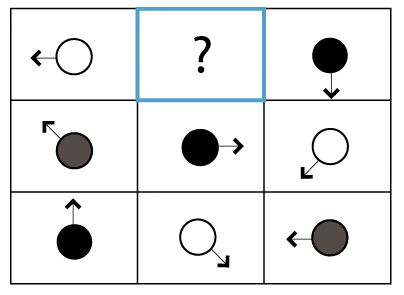
- Abstract Reasoning:
Which answer option is the correct shape that could be placed into the missing gap to fulfill the sequence? (Key-B)

 _U.S. Dollar
 _Nepali Rupees